Showing posts with label Pu-erh. Show all posts

Saturday, October 06, 2012

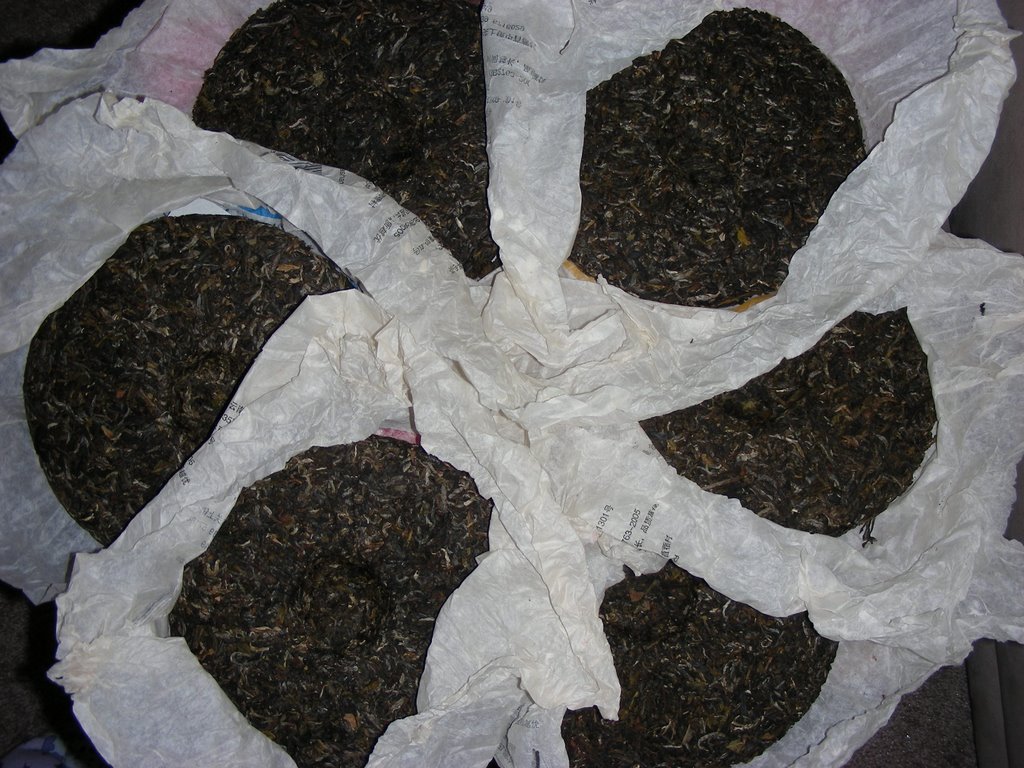
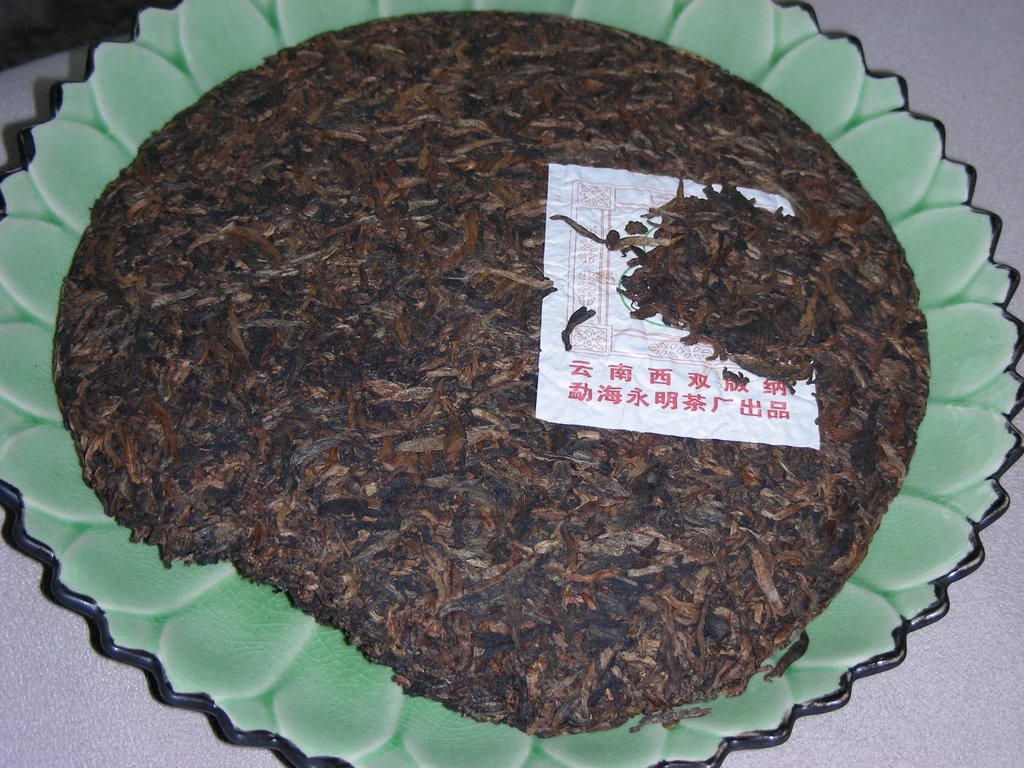
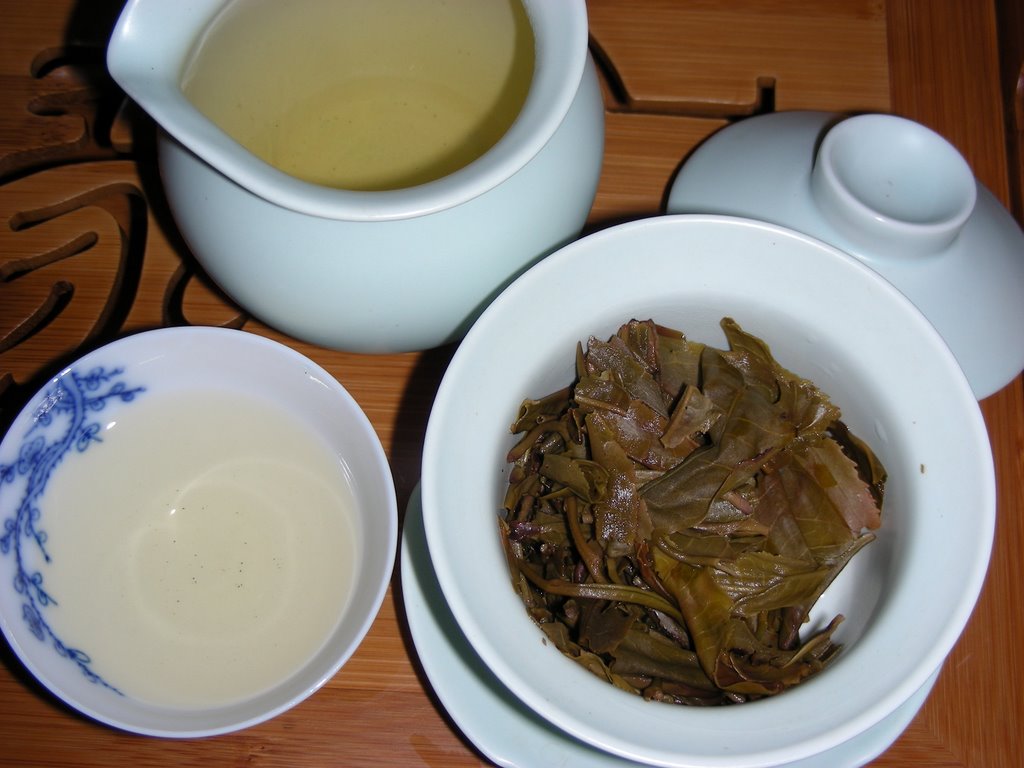
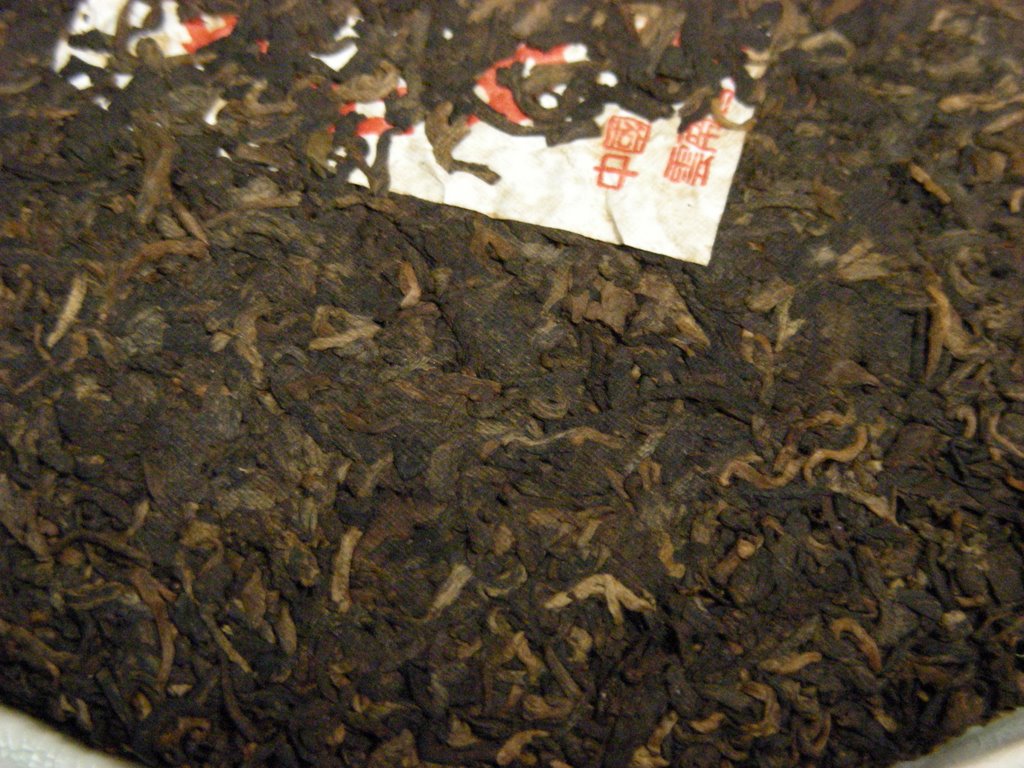
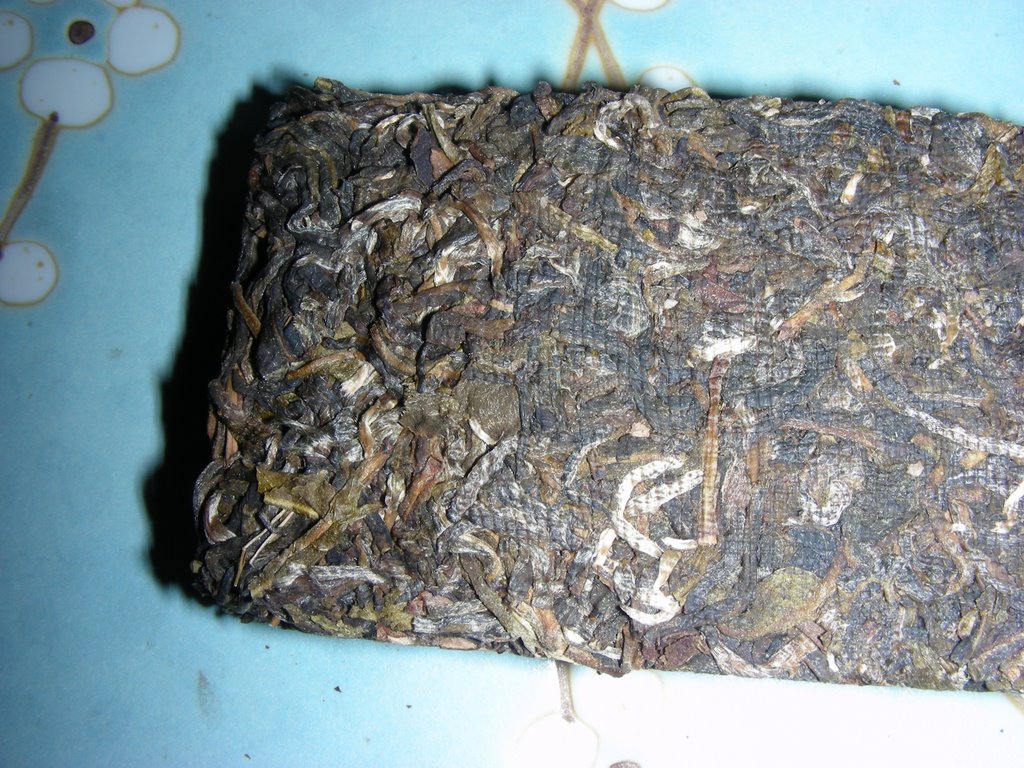
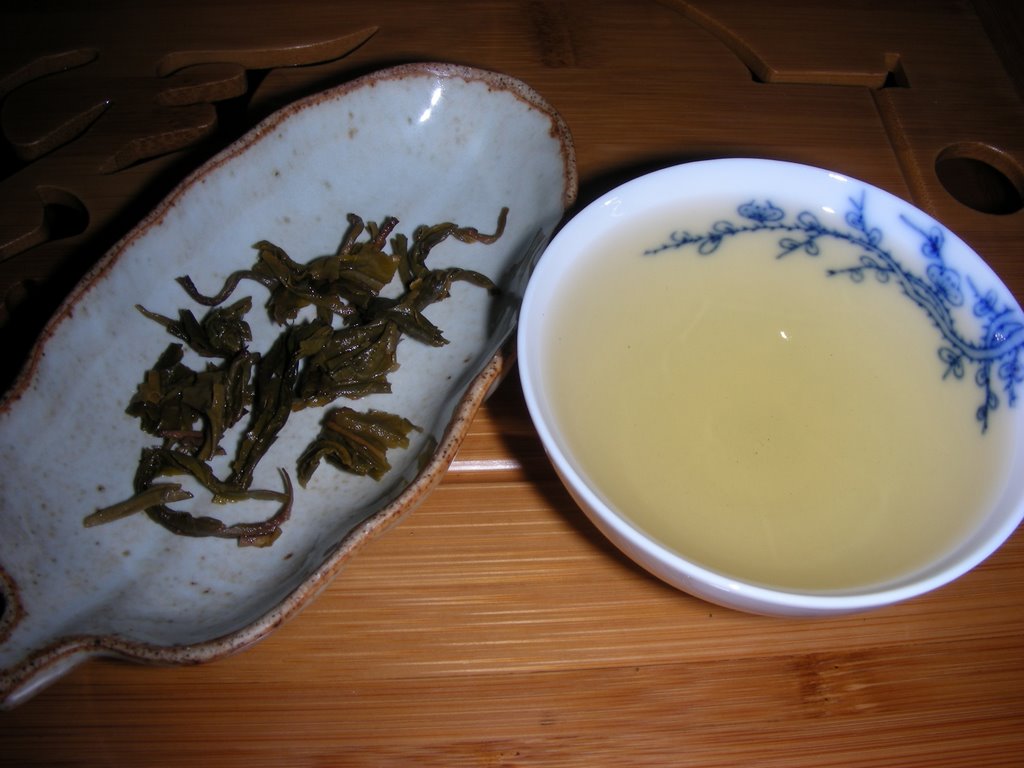
09 Wild Ancient Green Puerh - Zhong Zi Brand

Today is prep day for the Pu-erh tasting.  I had this same tea on Mid Autumn night brewed with a large yixing teapot of late Qing Dynasty.  The performance of the tea was amazing, so I wanted to try it in the Chao Zhou Zhuni Qing period pot.

Getting to know a tea takes time, using various tea wares, water, timing and methods to learn every aspects of a tea, learn what does it take to bring out the best of a tea.  As a tea merchant, finding a tea to sell is easy, finding a good tea which can stand the time is not easy.  I don't list much pu-erh teas as most people know, however I do have quite a selection stored away for my nieces and nephew.  This 2009 green pu-erh was originally obtained for my youngest niece whom was born in 2009.  However I secured more of them and will bring them home in the next trip, so I feel I should share some of them.  I personally think this is a good tea with good value for the quality.  The qi is so strong, I am still feeling it now a few hours after I had it. 


Thursday, February 18, 2010

Pu erh - YiWu Wild mao cha 2004

Harvest year: 2004 Spring
Production year: 2004
Name: Mao Cha
Tea type: Wild Large Leaf
Region: Yiwu
Maker: collected from villager

This tea is bundled up approximately 100 g each, collected from ancient wild trees.

Clean liquid, has chicken stock texture without the chicken flavor. :P
2 to 3 leaves on each stem, large thin leaves, a sign of old trees on high elevation.
Fresh dried tobacco flavor, rich, sweet and very soothing to the throat, making you crave for more. I think the tobacco quality makes it addictive just like real tobacco. A very nice green one.

Sold by each bundle 100g: $30
No small samples.

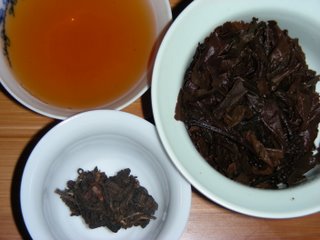
Pu erh - mid 90's cooked

Harvest year: Mid 90's
Production year: Mid 90's
Name: Chen Nian Pu Erh
Tea type: Cooked - Shu
Region: Meng Hai
Maker: unknown
Weight: 250 g

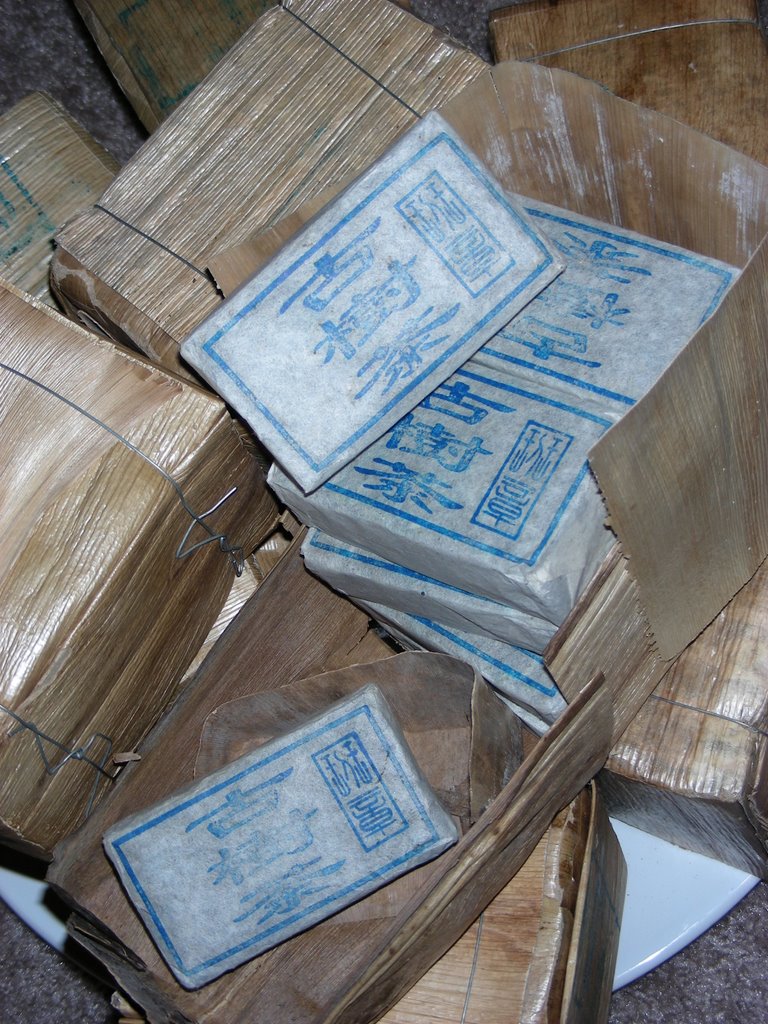
This brick comes in 250 g each in a box(torn&broken), unwrapped and not labeled. Typical of the 90's practice in Yunnan. Small broken leaves.
Clear dark red in color.

This pu-erh is one of the better cooked pu examples. Clear liquid is a sign of clean well stored tea. Taste is smooth, rich and thick, Chinese medicine for the first 2 brews when using 3 g or more leaves at a time. Subsequent brews are very nice with after rain fresh forest floor aroma, not dirt, it gets better as the color lightens, sweet and barky.

Whole brick is $98
2 are available in whole, 1 will be divided into sample packs.

Friday, September 05, 2008

Pu-erh, stockade by the bay and the people live in


Pu erh is a category of tea to tea drinkers whom are familiar with it or even obsess over it. What does it mean? Is it Chinese?

Pu erh is also the name of a town which functioned as a tea hub for pu erh tea trading since Ming dynasty. The center of the Tea Horse Ancient Road, collecting tea from other regions of Yunnan and distributing them outside of the Chinese border, and then some inside of China. Pu Erh region also produce tea despite its fame as a giant tea trading post. During Qing dynasty, Si Mao, Yiwu, Xi Shuang Ban Na and 6 famous mountains were part of Pu Erh county, employing over 20 thousand workers in the tea industry. The main reason for its location importance other than tea trading was salt mining in the town of Mo Hei in Pu Erh county. Salt and tea are 2 out of 7 essentials of Chinese everyday life. Wood, rice, oil, salt, soy sauce, vinegar, tea. The name Pu Erh has been used continuously for thousands years for the same general region with the boundaries changed numerous times in numerous ways.

Pu erh is a tribal language of the Ha Ni tribe. Pu meaning stockade, Erh meaning bay, Pu erh together meaning stockade by the bay. In ancient times, it's referred to the people of Pu Erh, including Bu Lang tribe, Yi tribe, De Ang tribe and others, most of which were our earliest tea cultivating ancestors.

Monday, June 23, 2008

1992 Golden needle white lotus pu-erh (ripen)

Found a batch of 1992 Golden Needle White Lotus pu-erh which has fairly strong Qi, I was up and running for 1.5 hours, using 4 g of leaves. I am having another tasting using barely 2 g of leaves (Will have pictures of this session up soon).

Dry leaves are small and uniform, obvious white frost, strong mulch/bark smell.

Liquid is clear and glowing, beautiful amber color, can turn very dark with more leaves and longer steeping, up wards of 10s infusions.

2 oz pack for $20
8 oz pack for $70
16 oz pack for $120

Shipping is $5 within 48 states for under 2 lbs, $3 for each additional pound. Europe $9 for under one lb, $4 for each additional pound.

Please email "tea at teahabitat dot com" to place an order or for more information. Thanks.

Monday, April 07, 2008

Nan Tian 8582 20th aniversary cake

A friend of mine acquired a Jian (10 tongs), of this cake a while back. This cake is made of pure Ban Zhang wild arbor leaves, using 8582 formula to compose this cake commemorating the 20th anniversary of the 8582 recipe, produced by Zhou Yong. Total of 100 Jian was made.

8582 recipe was created by Zhou Zong, brother of Zhou Yong. Zhou Zong was the founder of Nan Tian Company, one of the biggest tea traders in Hong Kong. Zhou's father was a political activist since the 40s and a jewelry trader, he also contributed to the invention of Wo Dui method to produce cooked pu-erh. 8582 was specially made for the Hongkong market and solely distributed by Nan Tian Co..


Nei Fei is a big leaf hot branded with Nan Tian (South Sky). I have seen fake ones stamped with red ink. Beware!


Taste is lovely Ban Zhang floral, sweet teas lasted many infusions, open leaves are strong and big. Compare to Ban Zhangs I have in stock, it's definitely a notch up.

Monday, February 25, 2008

Meng Ku Lao Ban Zhang 06

These Lao Ban Zhang bricks are almost 2 years old now. They were stored in my home for most of the time, in a card board box in a cool temperature room. Moisture variation is seasonal, but never too low. Nine months ago, I transported them to my shop in PV, moisture is much higher here all year round.

Upper brick is stored on shelf (dark) with only paper wrapping. Brick is fluffy and leaves are easy to pick out.

Lower brick is stored in a porcelain box. Brick is still compact and solid.

After a tasting session, upper brick obviously aged faster than the lower, color is darker as well. However I like the taste of the lower brick better, it's more refined, less "rushed".

Friday, June 22, 2007

Monday, June 18, 2007

Pictures of the Pu-erh event


Pictures of pu-erhs we tasted yesterday.


Will, Louise and guest.


Sean, Nick, Mindy and Mr. Liang in pink.


Jonathan, Danica and Guang. $5 if you could guess whose choppers are in the back! :P


90's green big tree, 2nd infusion I think.


90's green big tree leaf.

I'll post more details when I have more time.

Friday, June 01, 2007

Marine layer and pu-erh


Spring in So-cal is quite humid. Marine layer hovers the beach communities in the morning, which is giving my pu-erh a good dose of replenishment. I can smell the sweet aroma of my pu every time I walk by. Palos Verdes is particularly misty/foggy every morning and evening. You can see rolling clouds on the hill top. As I will transport my stock to that location, they should age really well. One of the cakes was over dehydrated at arrival, I am hoping the moisture will reverse the effect some what.

Tuesday, March 20, 2007

2001 Yi Wu and more new pots

Pu-erh in the picture is 2001 Zhong Hua Yi Wu by Jing Ye Hao, a sample from Houde. It's on the thin side even I used more leaves than usual, about 5g. Color is light amber and clear, taste is smoked wood/veggie, not the actually smoke smell or taste, but like smoked duck but not cigarette smoke, if that was a good analogy. An indescribable flavor, perhaps a cooked prune in syrup taste? A little bit of sweet after taste, medium round mouth feel. It's a decent tea. I can't say I like it as much as others I had, but maybe it'll age better, and I think it has a good chance.


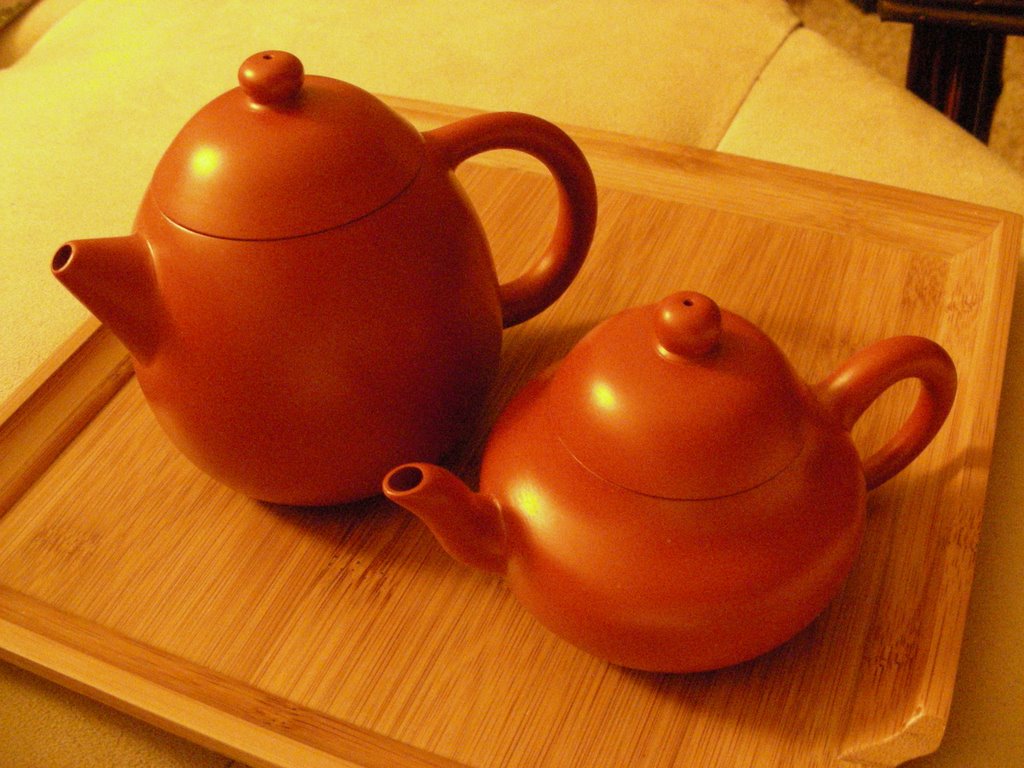
My never ending obsession of obtaining teapots. Pear shaped teapots are my favorites for now. A new member to the pear family, and the larger pot is up side down handle dinosaur egg.

Tuesday, February 06, 2007

05 vs 06 Lao Ban Zhang bricks

I bought a 2005 brick last year and liked it a lot, so I bought a lot of 10kg of the 06 bricks for aging. Although I had both tea today, my focus was away from tea, so I can't give accurate tasting notes at the time being. Pictures below show the difference of the two.

Left 05, right 06, both look about the same, however 06 seems a little less compressed than 05. I can break off the 06 rather easily in large pieces of leaves.


Left 05: Small broken leaves, this could be from my clumsy technique of breaking the brick, also I am currently prying the middle of the brick.
Right 06: Some whole leaves can be seen, consist of both young and old leaves.


Closer look of the 05 wet leaves.


Closer look of the 06 wet leaves.


Both are similar in color, light amber.

Tuesday, January 30, 2007

My opium addiction


Here are my bricks, 10kg of 2006 Lao Ban Zhang pu. The excitement I feel about these bricks is similar to an opium addict found a supply of the gooey paste in bricks on the opium bed.

Speaking of opium, tea and opium got mingled together starting late 1700's, the British forced opium import to China to pay for tea consumption instead of paying with silver, triggered the famous Opium War in mid to late 1800's. The lost of Hongkong, forced open trading in ports of Guangzhou, Xiamen, Ningbo and Shanghai, the nation was brutalized by the British and other European countries, lingering resentment of the western countries are still among many Asian countries in addition to China. It was the most difficult time in all China history.

Tea has been a luxury item highly sought after and fought for for hundreds years. I can't imagine not indulging every sip of tea I can get my hands on. I treasure my tea more than diamonds and gold! Tea can nourish your soul, enrich your spirit, cleanse your flesh. Beauty within is the ultimate endeavor.

Friday, January 12, 2007

1996 Zhong Cha Orange Uncooked- MengHai


It's been a while since I post anything. Wish you all a happy new year! Beginning of the year is the time to plan, so I have. One of them is drink lotsa tea of course. :)

I am drinking a 1996 Zhong Cha "orange in orange" uncooked pu-erh by MengHai, sample from Hou De.

Dry leaves smell nice, aged forest floor, mixture of dried leave and wood, no smoke or unpleasant smell. Medium compression, complete dehydration made it easy to break off leaf by leaf, shiny and white hair leaf tips can be found.

4 g, gaiwan, boiling water

Rinse, pour immediately, I usually taste the first rinse to see how drinkable it is. I was expecting something fermented astringent or even musty taste, to my surprise, it taste sweet and nutty right from the beginning.

1st brew, 10s, reddish amber color, clear, smooth creamy mouth feel, sweet, nutty, woody, hint of bitter after taste.

2nd brew, 10s, more red, heavier nutty, woody flavor, smoother and creamier than first, hint of bitter, subtle sweetness

3rd brew, 5s, color remain dark reddish amber even with shorter infusion, similar to 2nd brew but sweeter mixed with same level of bitterness.

4th brew, 5s, nutty, less woody, sweeter, light creamy mouth feel, lingering creamy mouth feel

5th brew, 10s, it become sweeter, floral flavor is coming out, quite interesting

I made 15 brews, each gets sweeter, but lighter in color, more floral and nutty, woodiness is almost gone since 8th brew.

Open leaves, mixed regions, some young meaty leaves, some matured meaty leaves, small amount of thin large leaves do not seem to come from the same type of tree as the meatier type.

Over all a well aged raw pu.

Saturday, December 02, 2006

2006 You Le wild bing by Six famous tea mountains

Ok, I can't help it. I sneak previewed the You Le wild cake. Its flavor is unlike other wild raw pu I had. Taste like lightly roasted dried papaya, sweet roasty and melon like fruity flavor. Interesting combination. Clean mouth feel, melon sweet after taste. It takes longer steeping to reveal the flavor, even the first couple brews take 20s steeping. There is a hint of minty cool feeling in back of mouth. Unusual combination!
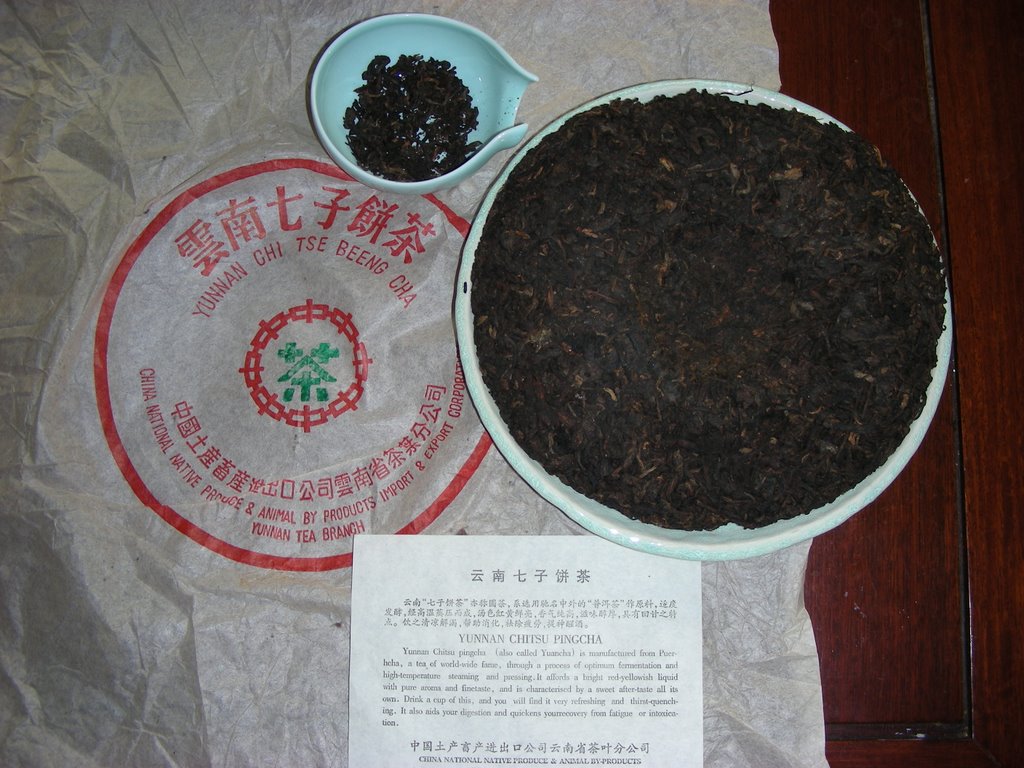
Six famous tea mountains tea

The past week has been restless in a sorta good way. I was over excited about and by all the new cakes, drinking all day long, 4 to 5 different tea each day, 1.5 hours on average times 5, that's almost 8 hours of constant caffeine intake, I was drunk every day and up till the wee hours. So I am taking a break, only 1 ooglong so far today while sniffing on other cakes. Addiction is not only limited to illegal drugs! :P

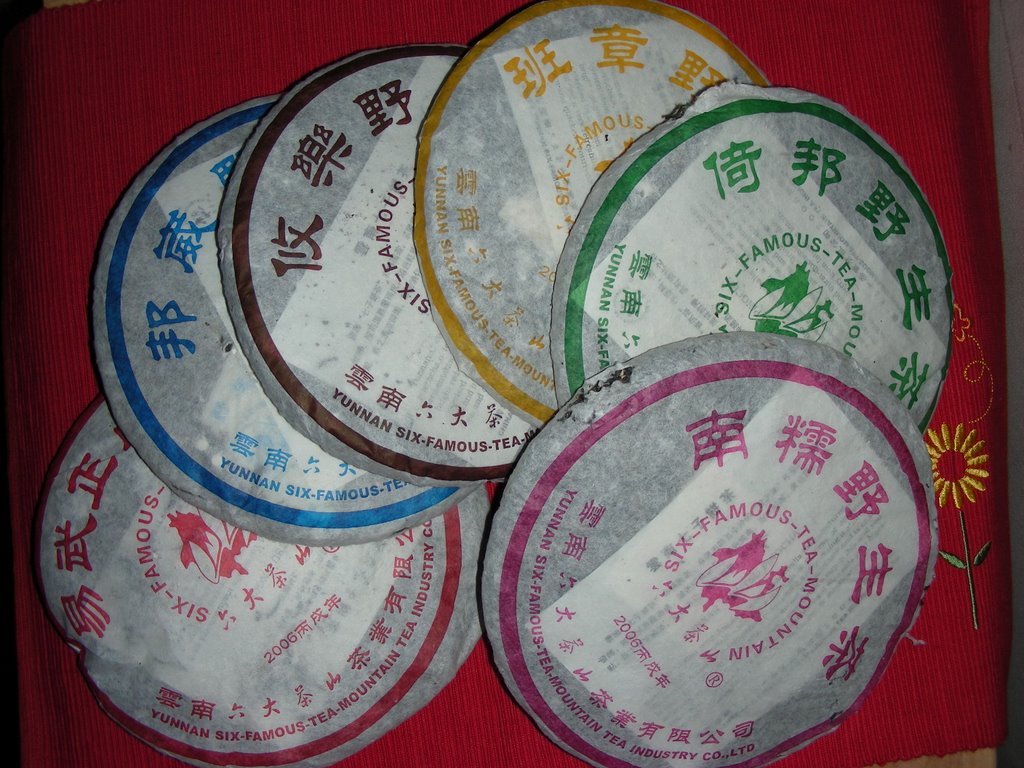
Tea from each of the six famous tea mountains in Yunna.

It's difficult to identify the distinctive aroma, flavor and other characteristics of tea from different regions if tasted on separate occasions. I feel like experimenting, finding out the subtle differences between each mountains. On this posting, I am on the very first step, the dry leaves contest!


From left to right:

1. Yi Wu - light fragrance, mellow, 30% tobacco, 70% hibiscus (sweet floral)

2. Bang Wei - more intense aroma, sweet tobacco

3. You Le - balanced aroma, not too strong, not too light, caramel sweetness with some smoky not tobacco smell

4. Ban Zhang - very light aroma, I don't know how to describe it, perhaps floral herbal but faintly noticeable

5. Yi Bang - similar to You Le, slightly stronger in aroma, caramel, smoky closer to tobacco but not intense

6. Nan Nuo - fresh tobacco, little roasty with a touch of sweetness, gives you that pleasant "weed" like heighten state when you take a long deep sniff all the way to your lung


I can't see any significant difference by their appearance. Color, composition, size, shape, mixture are all very similar if not the same.

I should taste them all at the same time to find the difference in flavor as soon as I recover from lack of sleep. It's easy to taste something and conclude whether you like it or not, but when something similar yet different in subtle ways, tasting side by side is the only way to tell the difference, and it's an excellent way to train your tasting palate.

Tuesday, November 28, 2006

2005 Golden Bud Beengcha Tribute Tea Cake

Spring buds mixed with 1st grade leaves from Bu Lang Shan. One of the highest grade ripe pu-erh available according to seller. Cake looks very attractive, a lot of young buds, I'd say mostly young buds compressed tightly.


2 grams of leaves were used for the first tasting. It turned out quite weak. So I am using 4 grams of leaves for this posting.


4g, boiling water, gaiwan

1st brew: 5s, reddish clear, smooth, no aroma, slight sweetness with pleasant wood taste, dry feeling in back of throat, after taste is incense like sweet between tongue and upper mouth.

2nd brew: 5s, dark red, very smooth almost creamy, sweet with a sour note, this could be avoided by using fewer leaves I think. Next tasting will be 3 grams! The sweet flavor is woody though not quite overwhelming as sandal wood, but definitely has the scent and smoky sweetness.

3rd and 4th brew: 5s and 10s, similar to 2nd with the same intensity of flavor, color and texture, sour note is dissipating with successive infusions.

6th brew: 20s, lighter in color, more transparent, not as intense in flavor, but smooth as other

It gave up around the 8th brew, it might be able to go on for an other one or 2 brews with longer infusion. After taste is sweet and leave a clean slick mouth feel for quite a while. Although nothing out standing in terms of flavor, but its smoothness is on top of the cooked pu-erhs lists.

You just have to be patient with pu-erh... Patience is golden, specially for pu-erh! Good potential for aging this bing.

Monday, November 27, 2006

2006 Lao Banzhang raw pu-erh

My pu-erh orders are here!!! I came home around mid-nite last night from the long Thanksgiving weekend, found 2 large packages from China in the mail box. My heart started pounding as soon as I smell the faint pu-erh aroma leaked through the card board boxes. 72 cakes all together! Imagine my excitement! Yay!!!


2006 Hai Lang Hao Lao Ban Zhang raw pu-erh cake


Dry leaves: This cake looks very attractive, a lot of young silver hairy leaves, both on top and bottom of the cake. A sign of quality leaves. Fresh tobacco mixed with floral or spring forest aroma. Something I notice is the hole in the bottom is not centered nor smooth as it came out of a mold. I am baffled by this irregularity.


2.5 g, gaiwan, hot boiling water, no pre-wash

1st brew: 10s, golden yellow, fresh tobacco aroma with a hint of sweetness, crisp clean and fresh mouth, sign of typical young pu, the smoky sweet taste gives an aged feel, however a 2006 young pu should be too fresh to have such flavor, unless it's harvested early 2006 and stored with high humidity. I found my other 2006 wild pu starting to give out aging flavor about 1 month ago, provided that I stored it in its own wrapping with a lot of ocean humidity since June.

2nd brew: 10s, deep golden yellow, less aroma, sweeter, more intense taste, still some tobacco, after taste is intense

3rd brew: 10s, similar to 2nd

4th brew: 15s, less sweet, tobacco flavor still remains

5th, 6th and on: 20s, 30s, 45s, lighter color, still tobacco, but pleasant, hint of sweetness, after taste is long lasting

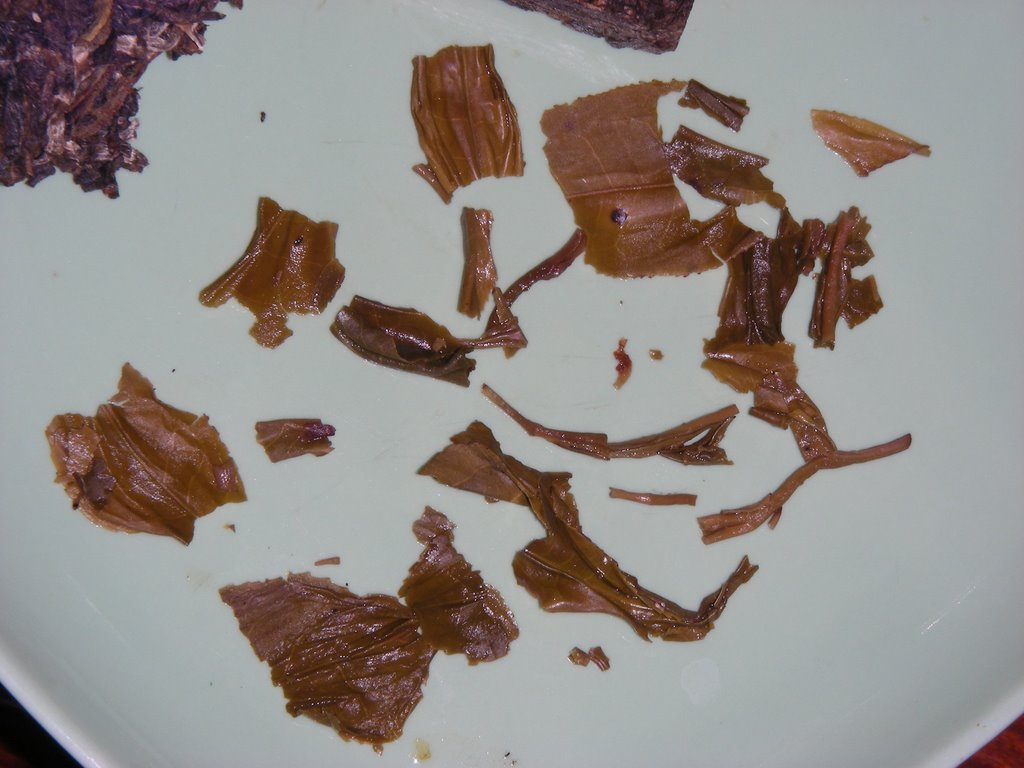
Open leaves: Large leaves, young and tender, reddish brown - a sign of fermentation. I wonder if it's over fermented, therefore gives out more tobacco flavor then it should be. By the size of the leave, it seems like authentic Yunnan large leave wild varietal. I have questions in my mind about this cake. Maybe it will take some time to discover its true flavor with another brewing method.

It's still giving out flavor at 10th brew, long lasting. I am not impressed yet at this first tasting. For $37 a cake plus shipping, I am not sure about the flavor at this point. Leaves looking this good with a flavor not measuring up to the PQR (price quality ratio), I hope I can find out more in future tastings.

This tea is highly caffeinated, I can feel the effect after more than an hour. After not drinking caffeinated tea for 5 days, I wonder if my body has lowered its tolerance for caffeine?!

Seller's remark:
This is one of few teas that I (as an experienced drinker of raw/Sheng Pu) actually experience a sort of drunken or heightened state when I drink.

HA! Now I know why!

Monday, November 13, 2006

Free Yun Nan Chi Tze Cha


Antique shopping is always fun. I have an obsession with Chinese antique, be it furniture, china wares, embroidery items. Wait, I have more obsessions than I realize.

I bought a beautiful Ching dynasty wood carved bed last week. Spending 3 hours at a shop, you bound to get to know the owner a little bit, and vice versa, he gave me a pu-erh cake! He didn't give me much information except he bought a bunch in Yun Nan 2 years ago. Any one can tell the age? It's cooked for all I know. His brother also made oolgong for us. Now, that's good service!

I tasted a sample of this pu, seems to me no more than 5 yrs old or even 3, for it lacks the smooth sweetness, strong wood taste. A typical cooked pu-erh that non-Asian and Hongkongnese would drink with milk and sugar.

Wednesday, November 08, 2006

2005 Mengku Banzhang Ancient Tree Pu-erh Tea Brick 100g

Finally my new camera came today. These are the pix I took. There is no comparison to Canon. The picture quality is so poor with flash on, all pictures came out with a blue hue. Perhaps I should give it an other shot in the sun and see how it goes. I am considering buying a Canon and return the Nikon already.


I had this tea since June and I just open it for a taste. Seller's note about this tea: Mengku Tea Factory made an expedition to remote area near Banzhang mountain to obtain the leaves for these cakes. The leaves are from trees 400 to 500 years old that were heavily cut during the Cultural Revolution. The trunk is still intact and in the 35 years since the trees have continued to grow and produce excellent quality Pu-erh with that special Banzhang taste and penetrating perfume-like aroma. When brewed is golden yellow and takes 10 or more infusions, each infusion with it's own taste and gradually less bitter and ineffably sweet.


1.5g, hot boiling water, zisha pot

Dry leaves: light aroma resembling tobacco and floral, mixture of young hairy tips and mostly dark green leaves, a few medium green leaves which doesn't look like it's from the same tree.

1st brew: 10s, light yellow color, lovely intense aroma of summer/fall floral, crisp clean mouth feel, not sweet, a bit of astringency

2nd brew: 15s, same color, still a lot of floral aroma plus a smoky taste, some astringency, no bitterness, a lot of wild puer aroma after taste, pleasant taste lasts a very long time - 20 minutes and more

3rd brew: 10s, same color, floral still strong, smoother in taste, astringency still, very nice after taste

This is one of those nice wild varietals which gives the kind of long lasting aroma I enjoy time after time. It lacks the aged flavor which due to its young age, in time, the glucose should break down enough to give it smooth and sweet taste. I find this tea taste differently when drunk hot or luke warm within the same brew. More floral when hot, and more smoky and smoother when cool.